
No Builder Fees
Eliminate recurring platform builder fees that eat client budgets or agency margins. Deploy unencumbered to standard hosting providers.
How projects move from raw concepts and living engineering contracts to unencumbered, local Next.js code with zero proprietary lock-in.
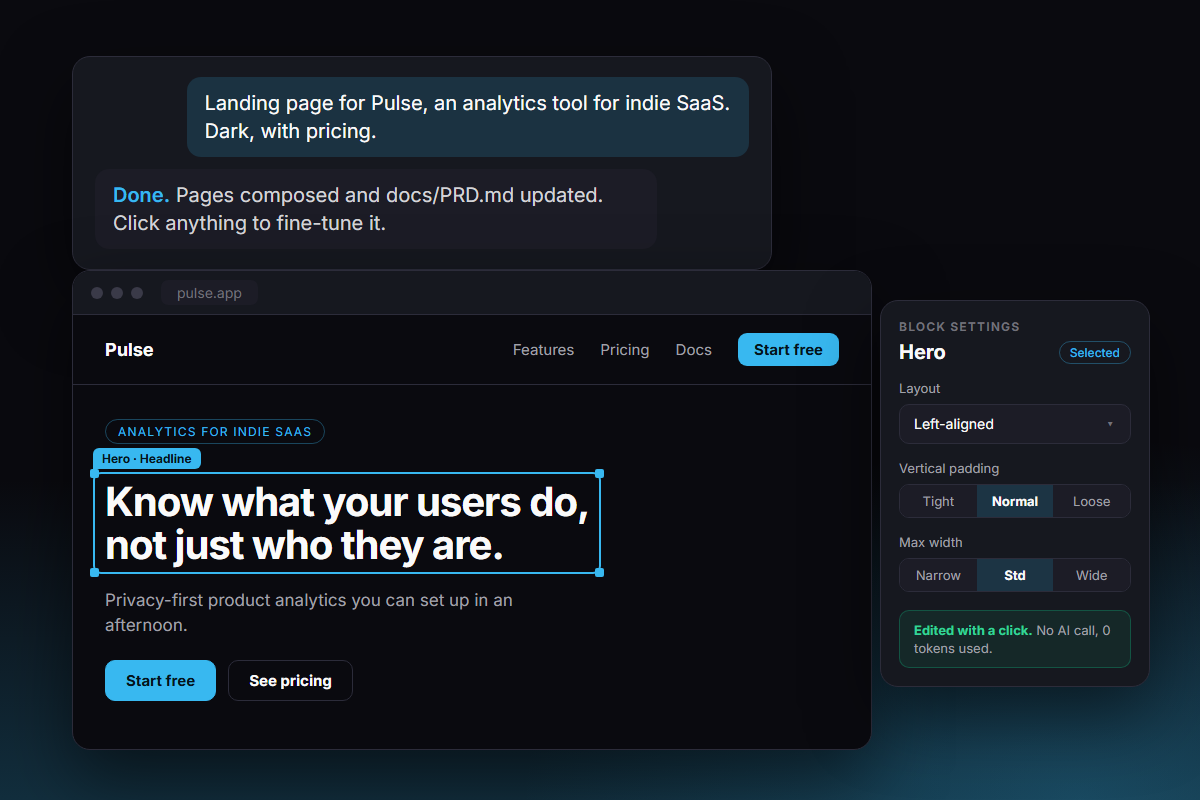
When bringing a new product to market, every hour and dollar counts. Developing your site conversationally with a project-aware AI lets you explore directions and refine pages over successive iterations, while the point-and-click visual inspector lets you adjust spacing, typography, and styling with zero API charges and no LLM latency.
docs/PRD.md and docs/TDD.md specifications before touching interface code.Ship an authentic product presence quickly without burning early runway on SaaS site subscriptions.
Anchor client deliverables to living specifications and hand off clean React code governed by strict component contracts.
Client engagements routinely suffer from misaligned handoffs: either clients request endless scope changes that erode project margins, or developers spend hours translating Figma artboards into bespoke, fragile code.
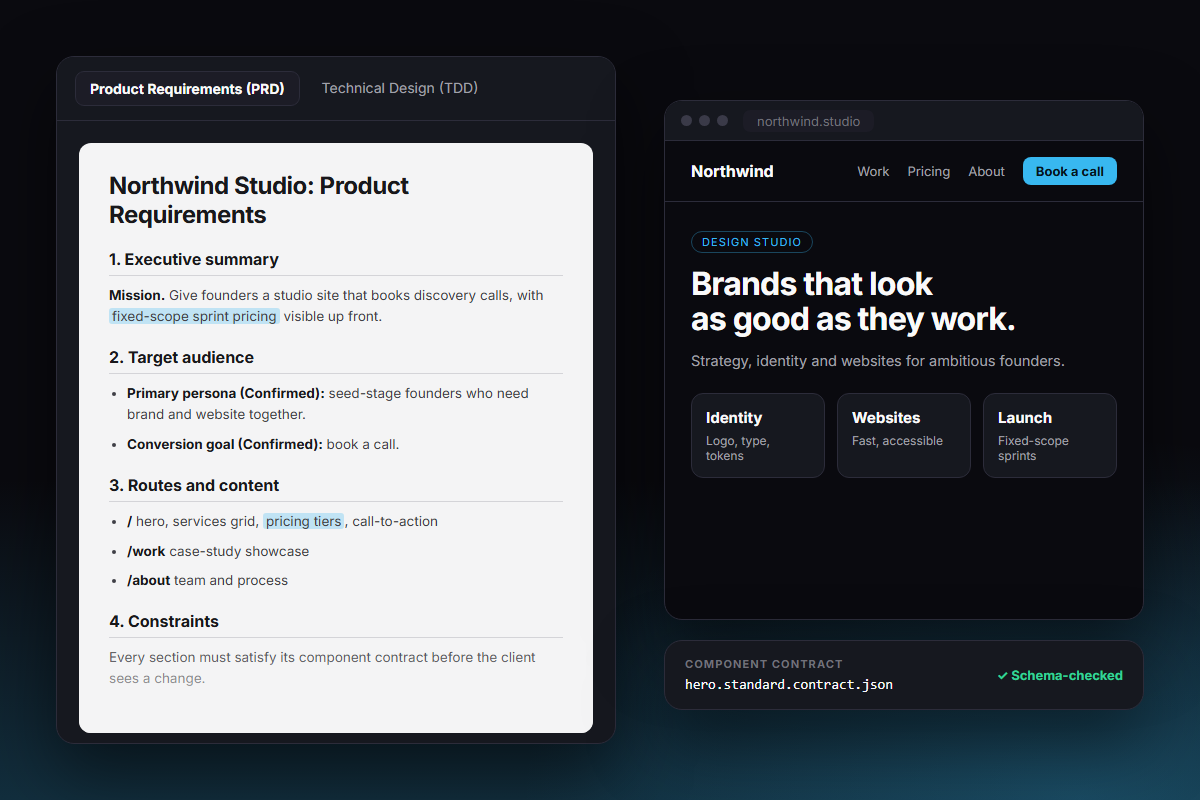
With Qanvas, project delivery is anchored around living specifications in docs/PRD.md and docs/TDD.md before composing a single block. Designers assemble pages conversationally within machine-checked component contracts (.qanvas/contracts/), while engineers fine-tune details with the zero-latency visual inspector. The client receives clean TypeScript and token-driven CSS in a standard Next.js project for their Git repository.
Living Engineering ContractsDeliver bespoke Next.js presences anchored by canonical PRD and TDD specifications. Machine-checked contracts protect code quality while clients receive a self-contained Next.js project.
docs/PRD.md and docs/TDD.md files eliminate scope ambiguity prior to layout synthesis.Engineered for professional design-to-development handoffs without intermediate SaaS friction.
Eliminate recurring platform builder fees that eat client budgets or agency margins. Deploy unencumbered to standard hosting providers.
Hand over pure TypeScript, React, and token-driven CSS in a standard Next.js project. Zero proprietary SDKs or obfuscated bundles.
Lock typography scales, surface color tokens, and component interfaces directly into machine-checked contracts (.qanvas/contracts/). Creators compose freely without risking schema drift or broken production builds.
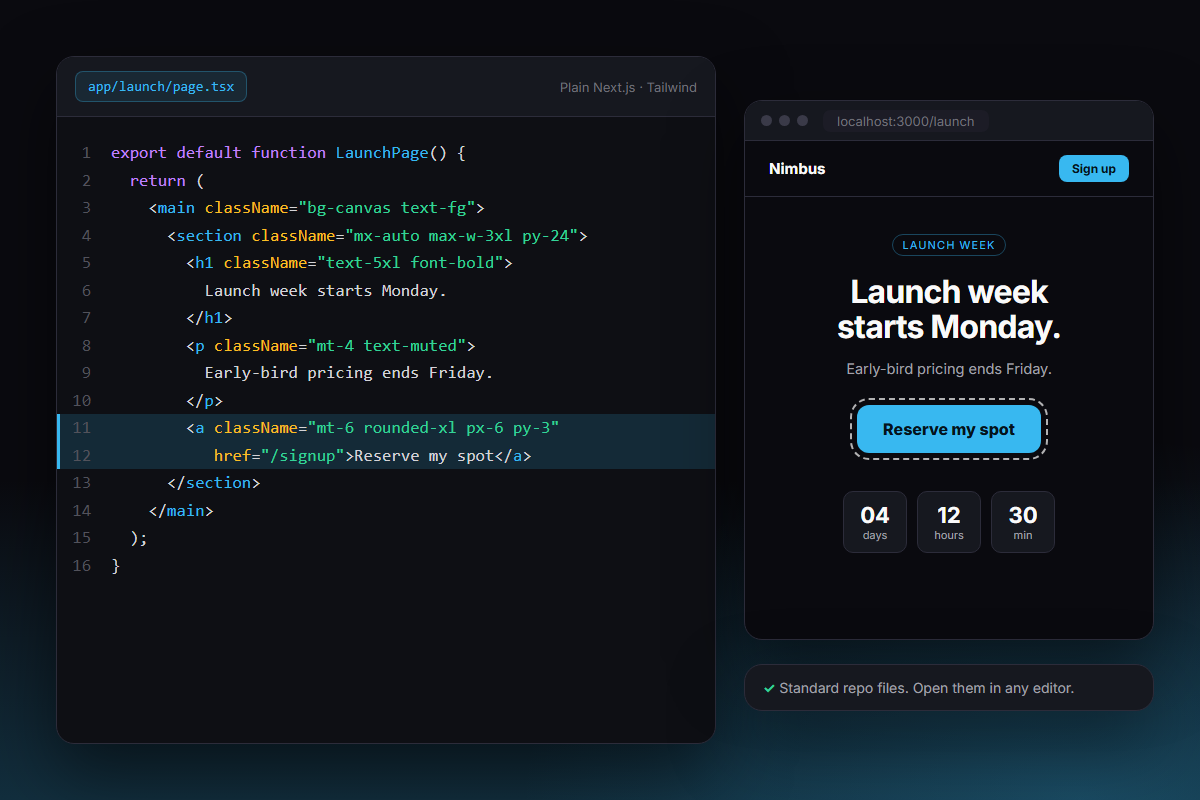
Marketing and campaign teams need to ship high-converting pages quickly, but engineers dread fragile visual builder exports polluting their repository. Qanvas turns visual edits into typed React components and token-driven CSS, guarded by machine-checked component contracts.
A disciplined, repository-native workflow that engineering teams actually respect.
Create a dedicated Git branch in the repository of a site you exported from Qanvas, and open the project in Qanvas at localhost:7140.
Refine copy and layouts through iterative conversation with an agent grounded in your active routes and design tokens, paired with direct visual inspector control.
Re-export into the branch: standard TypeScript and React code that produces clean, diffable Git commits for engineering code review.
Merge approved PRs into main. Standard CI/CD builds production artifacts automatically with zero external builder webhooks or cloud dependencies.